👤 Profile Redesign
Overview
While supporting Business.NJ.gov, I led a large, multi-sprint audit and redesign of the Profile experience. The work focused on making the profile more consistent, actionable, and scalable, while unlocking personalization and downstream task recommendations. Rather than treating the profile as static data storage, this initiative reframed it as a core product surface that powers guidance, referrals, and long-term user value.
- My Role: Lead product designer
- My Responsibilities: Product strategy, UX audit, interaction design, stakeholder facilitation, design system updates
- Timeline: Multiple sprints over several quarters
- The Team: 1 product manager, 3 engineers, 1 content strategist, 1 analytics partner. This was a sub-team of the main Business.NJ.gov project.
- Tools Used: Figma, Mural, Trymata
Framing the Challenge
Problem
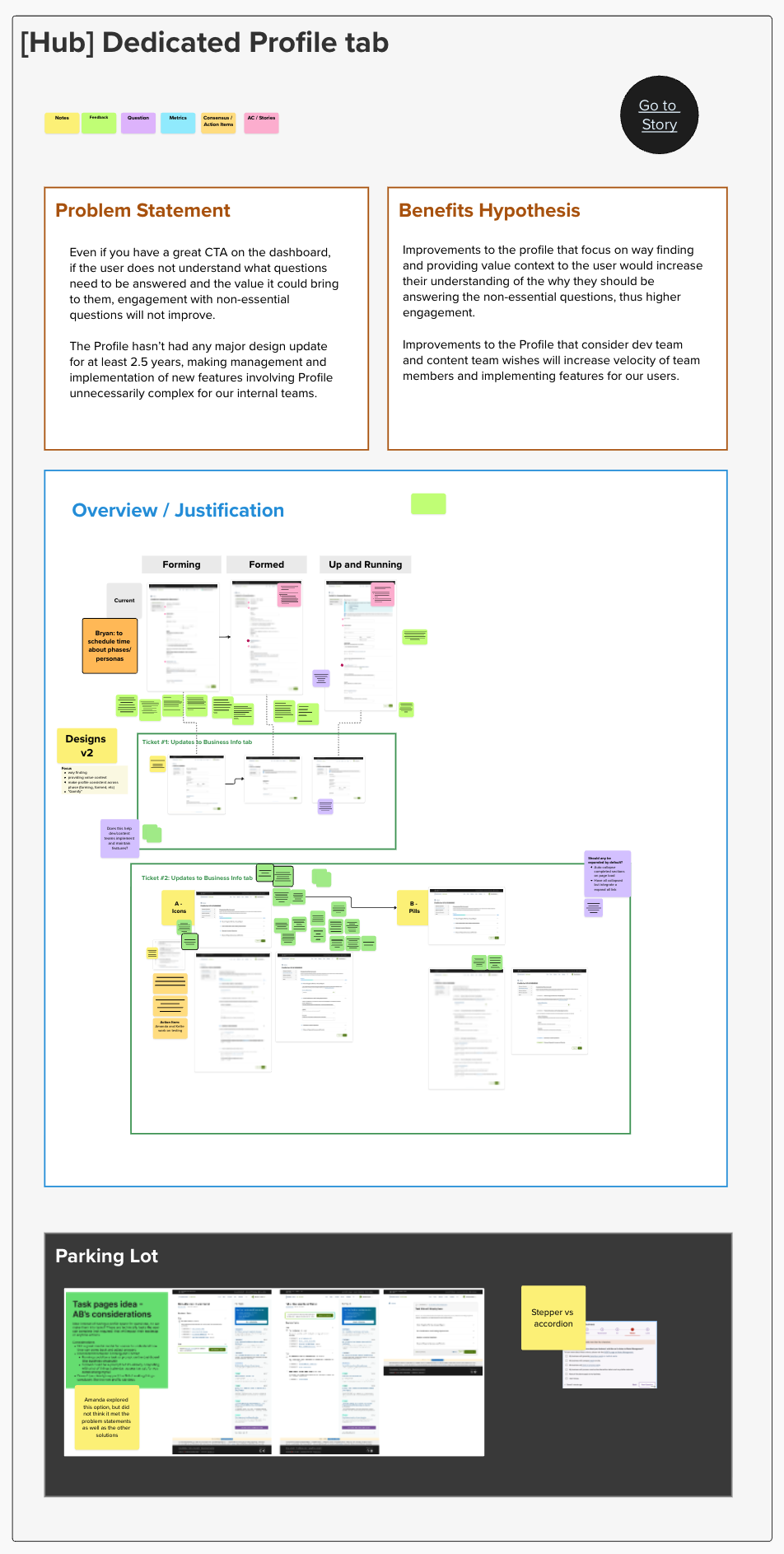
The Profile had grown organically over time, resulting in inconsistent data, fragmented layouts, and an unclear purpose.
Pain point #1
Profile fields and content varied based on user phase, persona, or industry, creating confusion and edge cases.
Pain point #2
The "Customize Your Experience" questions were underutilized, limiting personalization and reducing referrals to relevant task screens and partner agencies.
Pain point #3
The lack of standardization increased complexity for design, product, and engineering when introducing new features.
Hypothesis
By auditing and standardizing the Profile and rethinking how and where the "Customize Your Experience" questions appear, we could create a clearer, more usable experience for business owners while simplifying future product development.
Goal
Design a scalable, user-centered Profile that supports personalization, improves engagement, and serves as a reliable foundation for future features.
Process & Approach
Key contributions
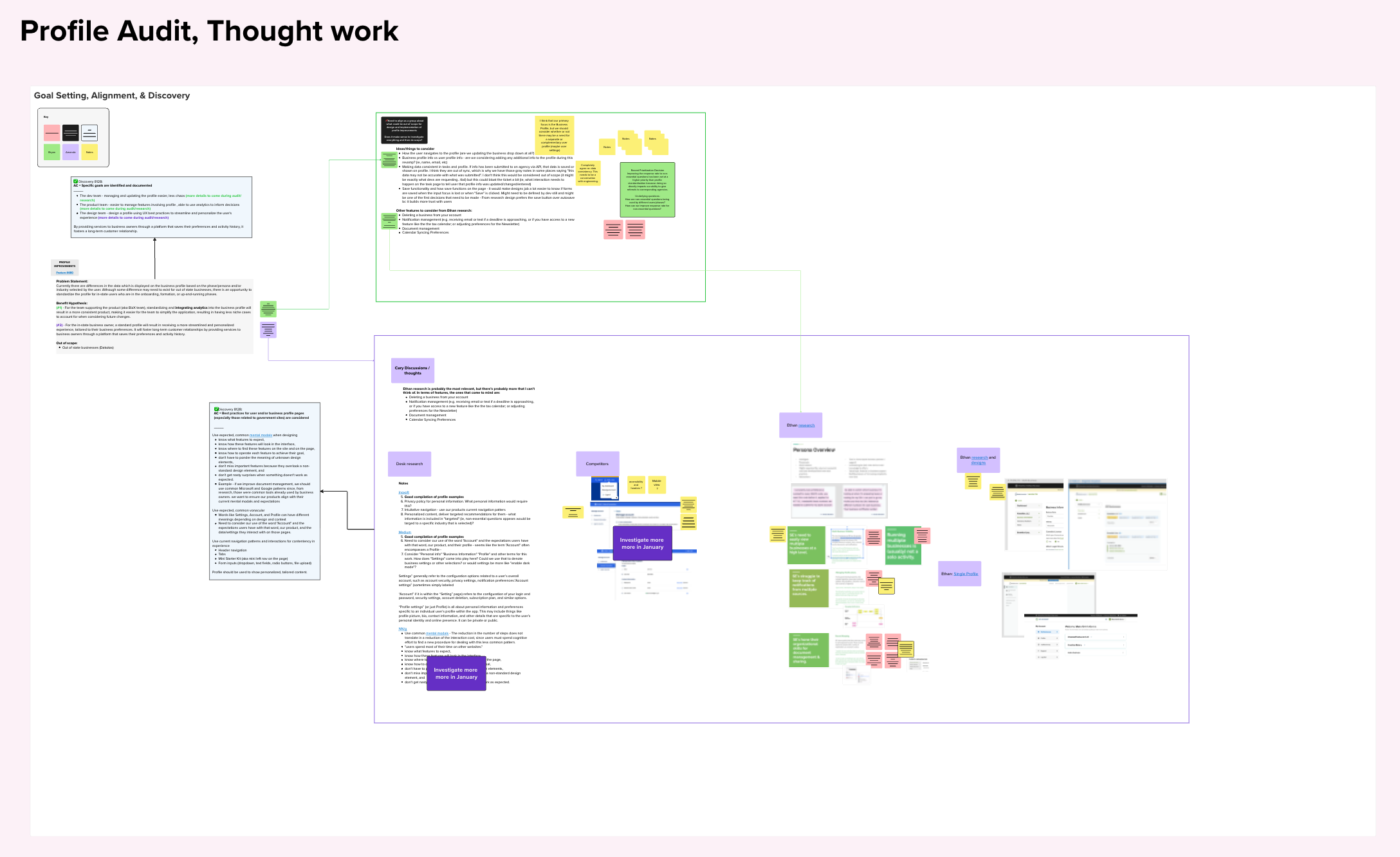
- Led a comprehensive audit of the existing profile experience across phases, personas, and industries.
- Used early research and audit findings to align stakeholders and product on a focused strategy rather than incremental patchwork fixes.
- Partnered with the product manager to define the scope that balanced user impact, technical feasibility, and SAFe delivery constraints.
- Collaborated closely with engineering to understand technical constraints and system dependencies, ensuring designs were feasible for phased, iterative implementation.
- Facilitated cross-functional critique sessions to pressure-test designs and surface edge cases early.
Discovery
- Reviewed prior research, analytics signals, and qualitative feedback to understand how the profile was actually being used.
- Conducted a competitive analysis of state and private websites, uncovering common mental models and patterns to consider.
- Identified two core opportunities with the highest leverage: standardizing profile structure and improving engagement with the "Customize Your Experience" questions.
Design
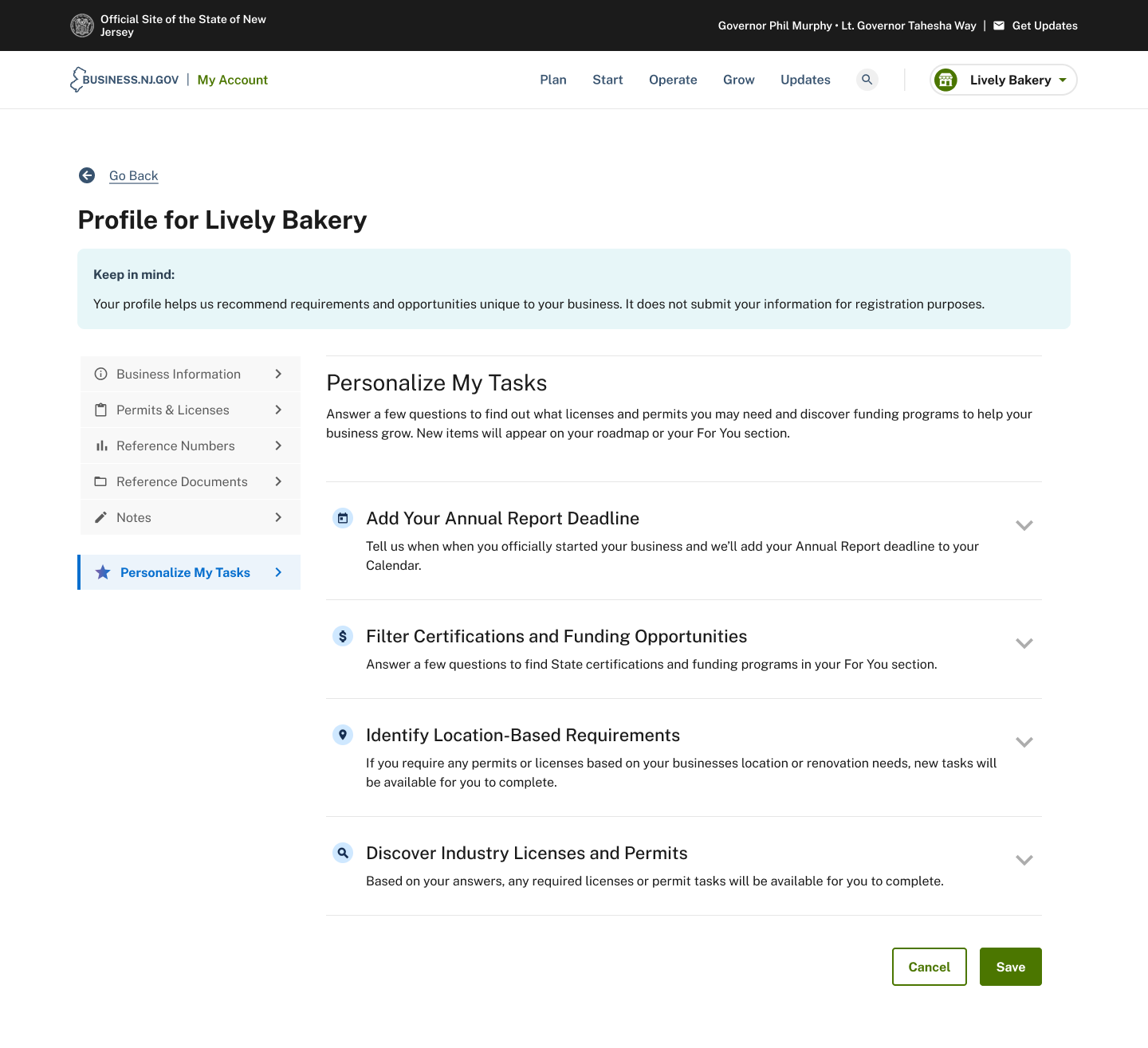
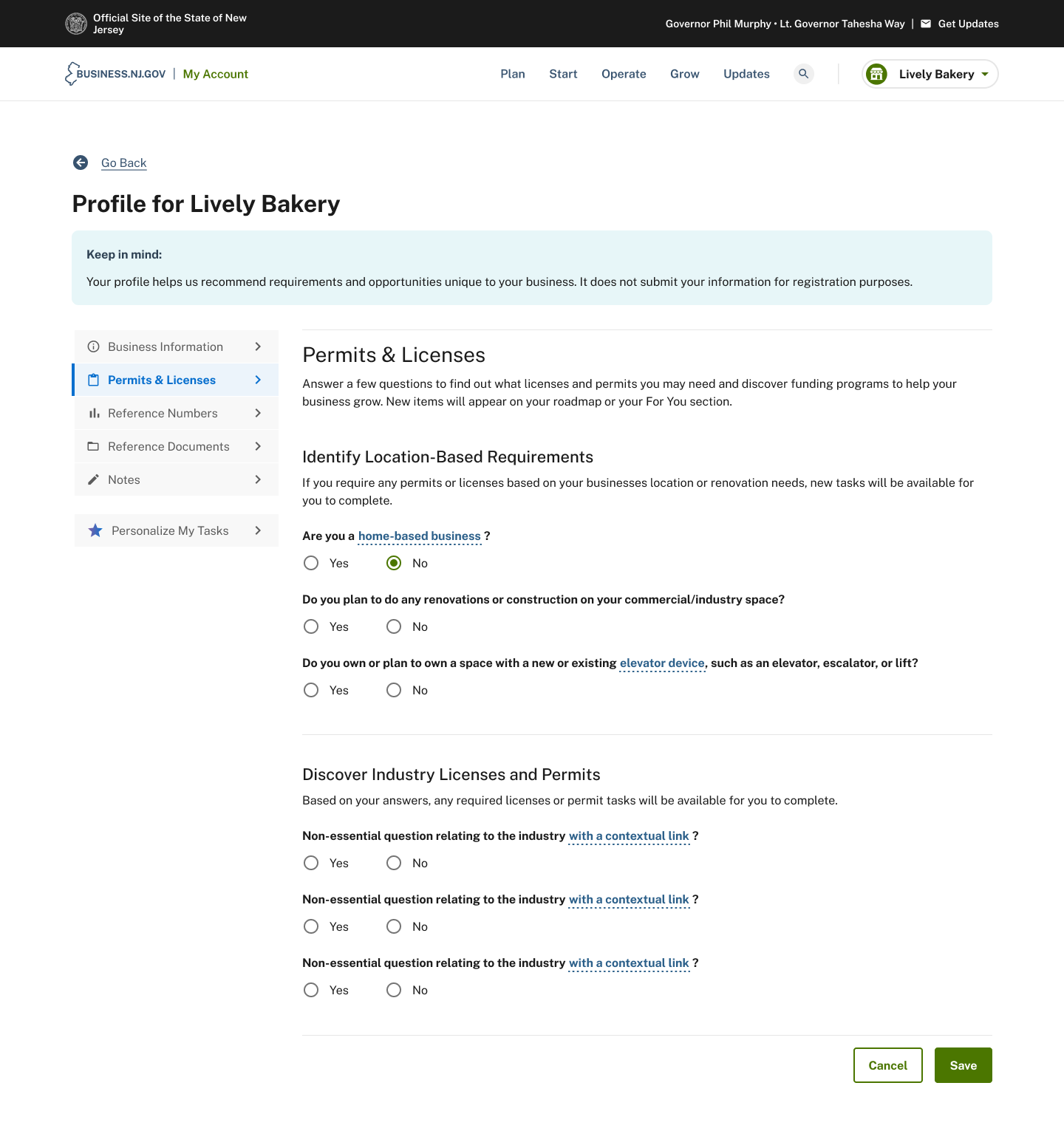
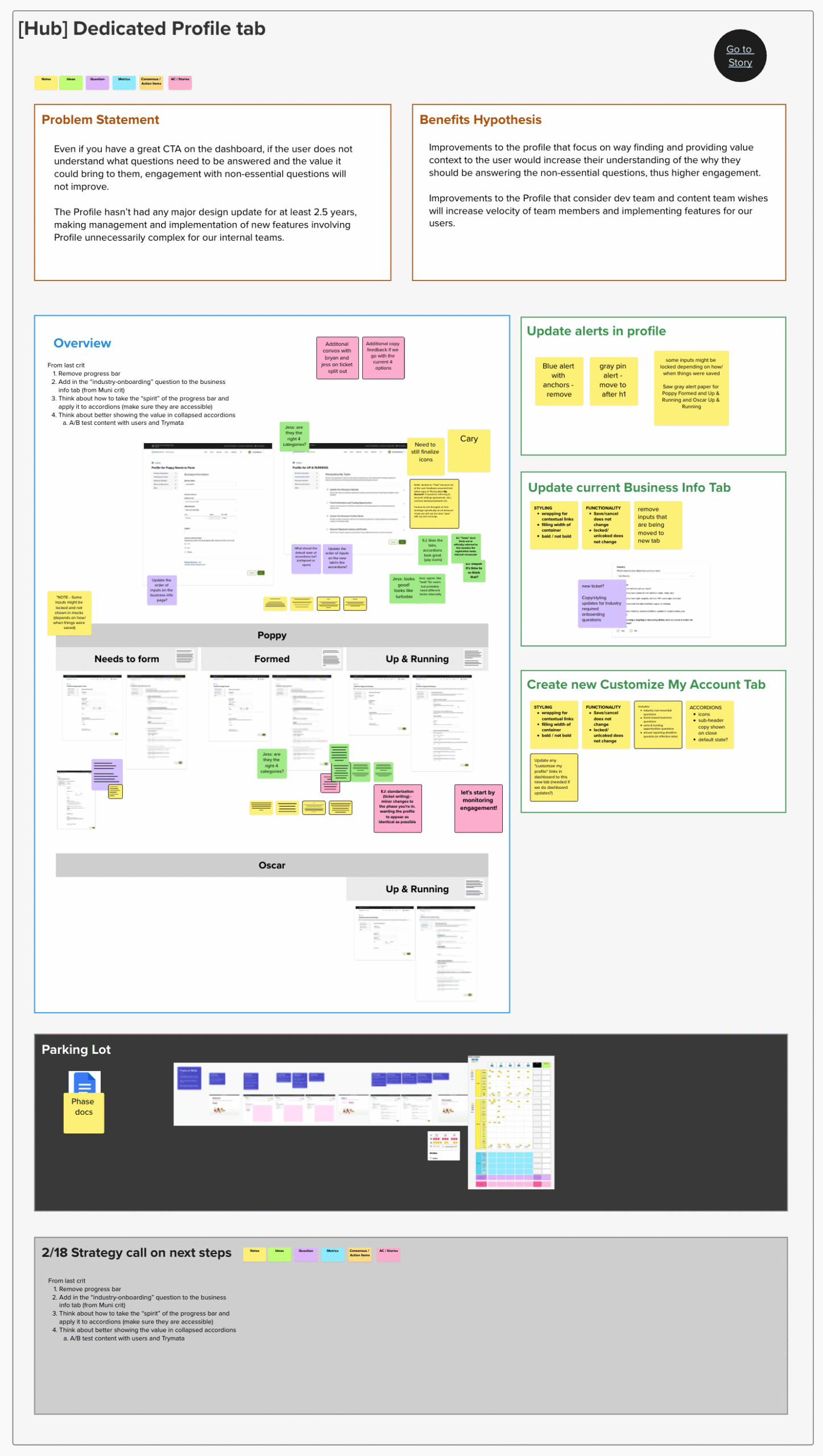
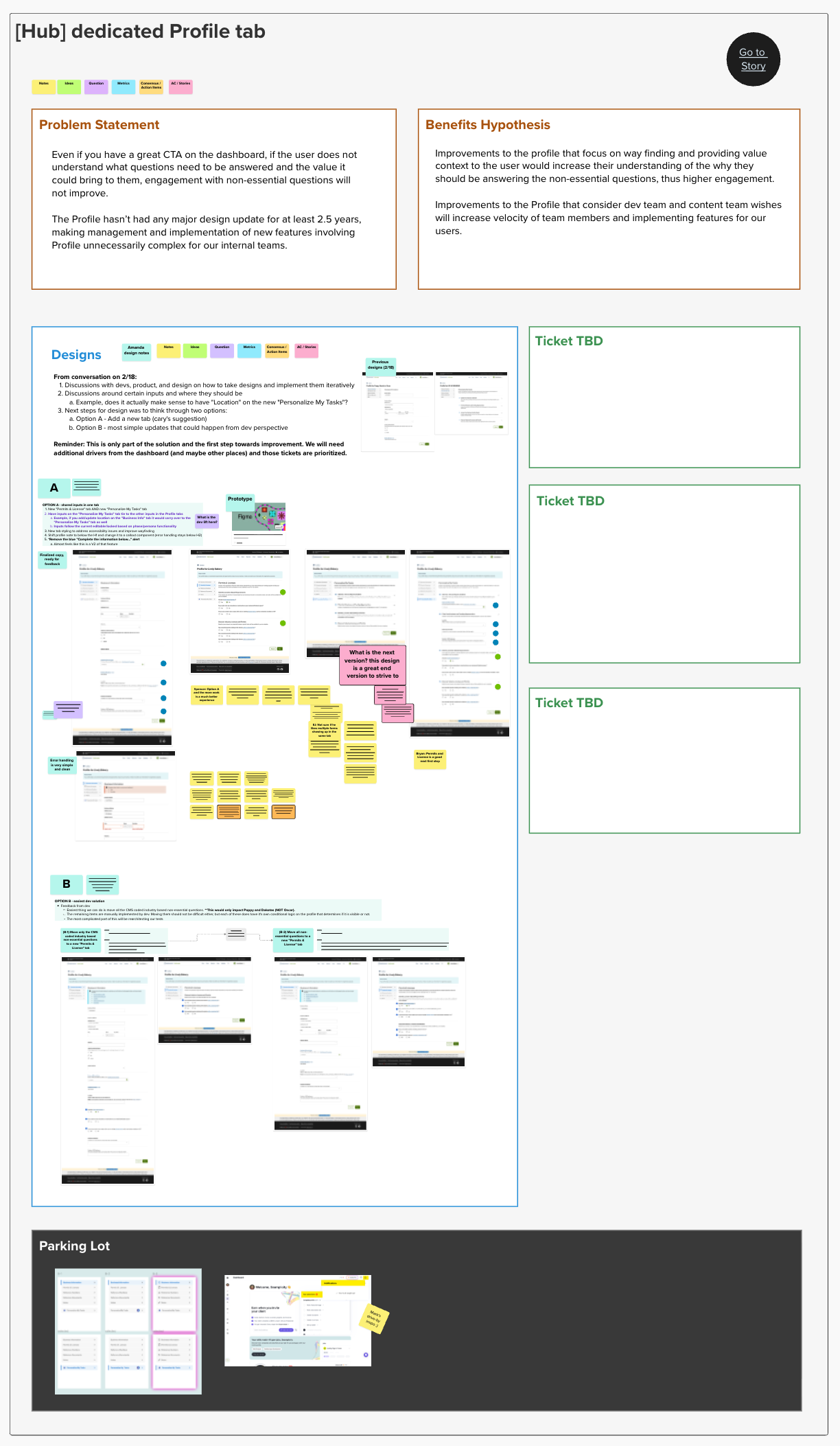
- Explored patterns for organizing the "Customize Your Experience" questions, including a dedicated profile tab designed to reduce cognitive load.
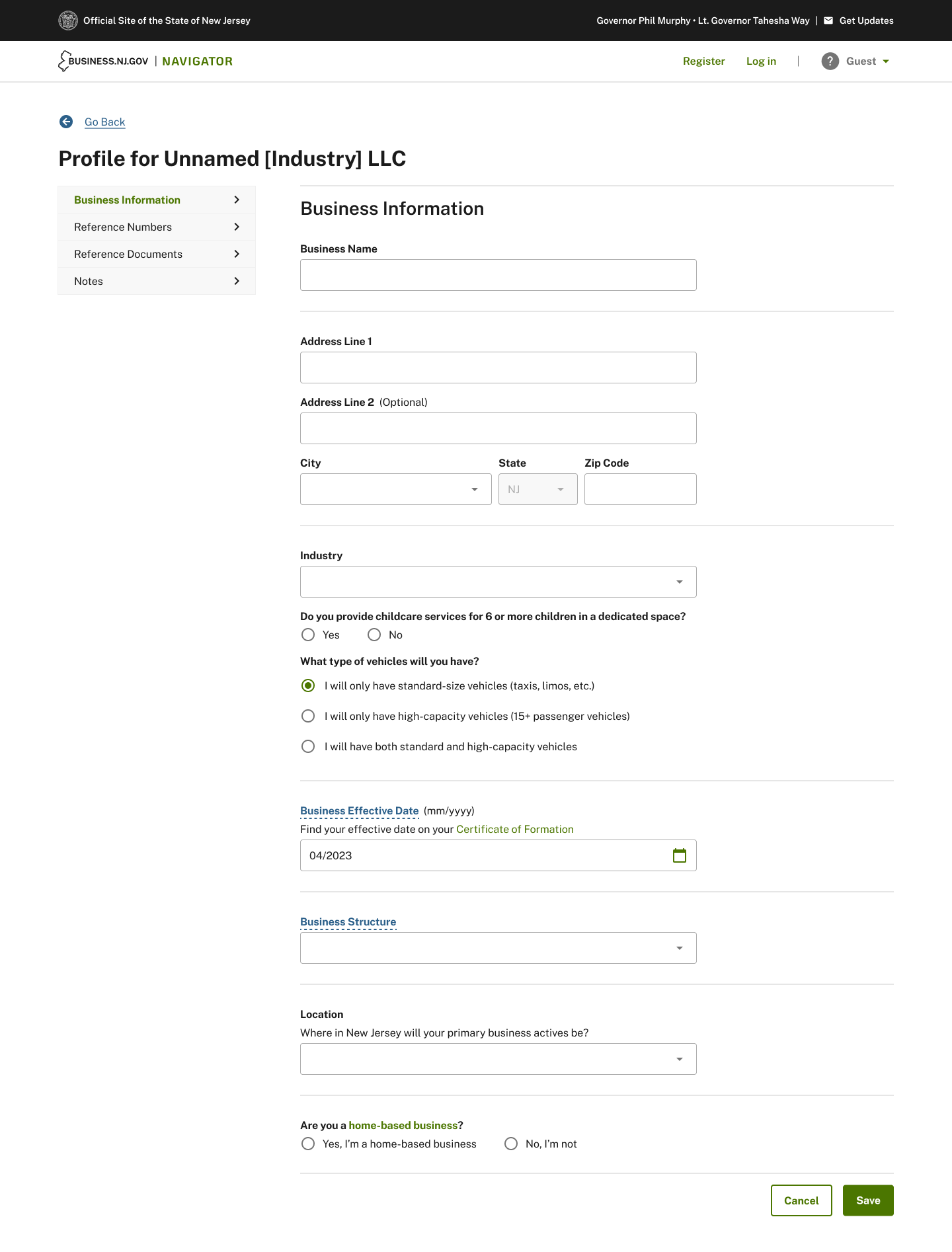
- Defined principles for profile standardization, ensuring consistent fields and layouts for in-state users across phases.
- Applied familiar mental models and government-friendly UX patterns to increase trust and usability.
- Created and refined reusable components, contributing updates back to the design system as needed.

Implementation & Iteration
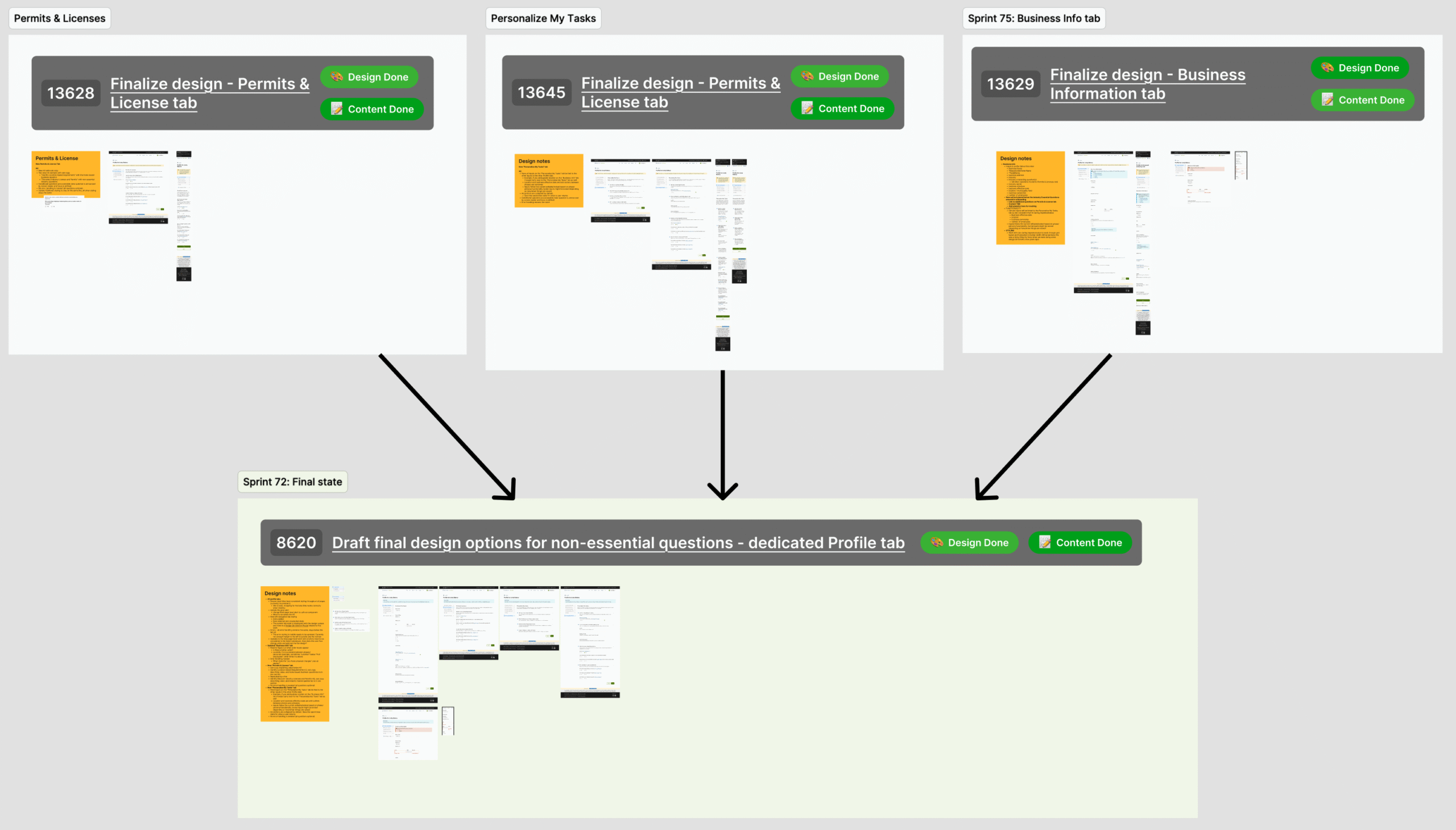
- Iterated through multiple design versions to account for complex user paths and edge cases.
- Supported asynchronous reviews with recorded walkthroughs to maintain momentum across holidays and outages.
- Delivered developer-ready designs that aligned with long-term platform goals.
Challenges & Solutions
Challenge #1
Surfacing the "Customize Your Experience" questions without overwhelming users.
Solution #1
Grouped and structured questions within a dedicated profile area, using hierarchy and progressive disclosure.
Challenge #2
Managing widespread variation in profile data across phases and industries.
Solution #2
Defined a standardized profile framework for users, reducing exceptions while allowing necessary flexibility.
Challenge #3
Aligning a large group of stakeholders around a cohesive direction.
Solution #3
Used audits, visual artifacts, and structured critique sessions to ground decisions in shared understanding.
Outcomes
Deliverables
- Comprehensive profile audit and strategy artifacts
- High-fidelity designs for a standardized Profile
- New interaction patterns for organizing and engaging with the "Customize Your Experience" questions
Results
- Transformed the Profile from a passive settings page into a strategic foundation that powers personalization and downstream task experiences.
- Reduced platform complexity by standardizing profile structure, enabling faster and more confident iteration for design and engineering.
- Created strong alignment across product, design, engineering, and stakeholders around a shared vision for the Profile, reducing rework and unblocking iterative delivery.
Key Takeaways & Learnings
Foundational Redesigns Succeed with Clear Framing and Phased Delivery
Redesigning a core product surface required strong alignment on purpose and scope. Phased delivery enabled meaningful progress while supporting ongoing development.
Standardization Is a Strategic Design Tool
Thoughtful standardization reduced complexity for the system and improved clarity for users. Consistency created a foundation for scalability and faster iteration.
Profile Data Is a Product Asset
Designing profile information as reusable, reliable data enabled personalization, task discovery, and cross-agency guidance, increasing the long-term value of the platform.